What is Sailing?
Never been on a sailboat? Here's everything you need to know before your first time on the water.
The basics
Sailing is the art of using wind to propel a boat through the water. Unlike a motorboat, a sailboat harnesses natural forces. You work with the wind, not against it.
A sailboat can't go directly into the wind, but it can travel at almost any other angle to it, including upwind, by angling the sails like a wing to generate lift rather than just push.
You don't need to be strong or athletic to sail well. It's a skill sport. Technique, reading conditions, and quick decision-making matter far more than brute force.
How Does a Boat Actually Move?
The sail works like an aeroplane wing. Air moves faster over one side, creating a pressure difference that pulls the boat forward.
Wind fills the sail
The sail catches wind and creates a force that acts both forward and sideways on the boat.
The keel resists
The keel or centreboard pushes back against the sideways force, leaving only forward motion.
The boat moves forward
The net result is the boat driving forward through the water. Trim the sails right and you go faster.
Types of Boats
Different boats for different sailors and situations.
Dinghies
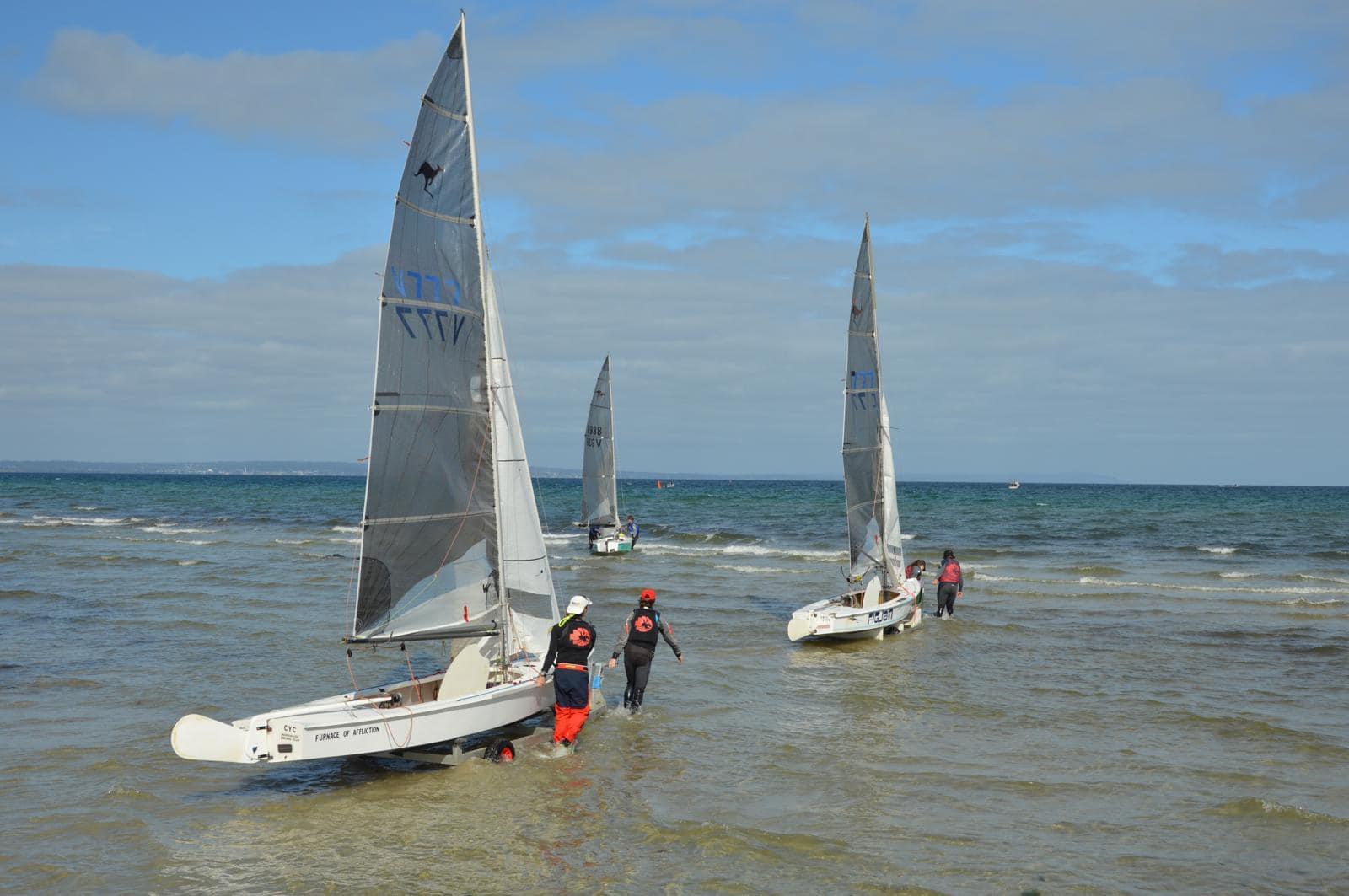
Small, lightweight, open boats sailed by 1 to 3 people. Highly responsive and a great way to learn the fundamentals. The Laser and 420 are classic examples.
Keelboats
Larger, heavier boats with a fixed keel. More stable than dinghies and typically crewed by 4 to 8 people. What most people picture when they think of yacht racing.
Trailer Sailors
Mid-size boats that can be trailered to different waterways. A popular choice for cruising and club racing and a good step up from a dinghy.
Key Terms to Know
Sailors speak their own language. Here's a quick glossary.
Points of Sail
The angle of your boat relative to the wind. Sailing upwind (close-hauled), across the wind (reaching), and downwind (running) all require different sail trim and techniques.
Tacking & Gybing
The two ways to change direction. Tacking turns the bow through the wind; gybing swings the stern through. Both are essential manoeuvres you'll learn early.
Trim & Balance
How you set and adjust your sails to maximise power. Good trim means the boat moves efficiently; bad trim means you go slower or heel uncomfortably.
Right of Way
Like road rules, but on water. Port vs starboard, windward vs leeward. Racing and cruising both have rules that keep boats from colliding.
Keel & Centreboard
A weighted fin underneath the hull that resists sideways drift and keeps the boat from tipping over. Dinghies use a retractable centreboard; keelboats have a fixed keel.
Regatta
A sailing competition made up of a series of races, usually held over one or more days. RMIT Sailing enters local regattas throughout the year.
What to Expect on Your First Sail
We do a safety briefing on shore covering life jackets, how to fall in safely, and what to do in an emergency.
You'll be paired with an experienced crew member who can walk you through what's happening and what to do.
You'll learn the names of the ropes and parts of the boat as you use them. No pre-study required.
By the end of your first session you'll have tacked, gybed, and had a go at the helm. Most people are surprised by how quickly it clicks.
Ready to give it a go?
No experience needed. Just show up. Become a member and get on the water with us.